
The 2026 In-Ground Pool Planning Guide for Rochester, NY
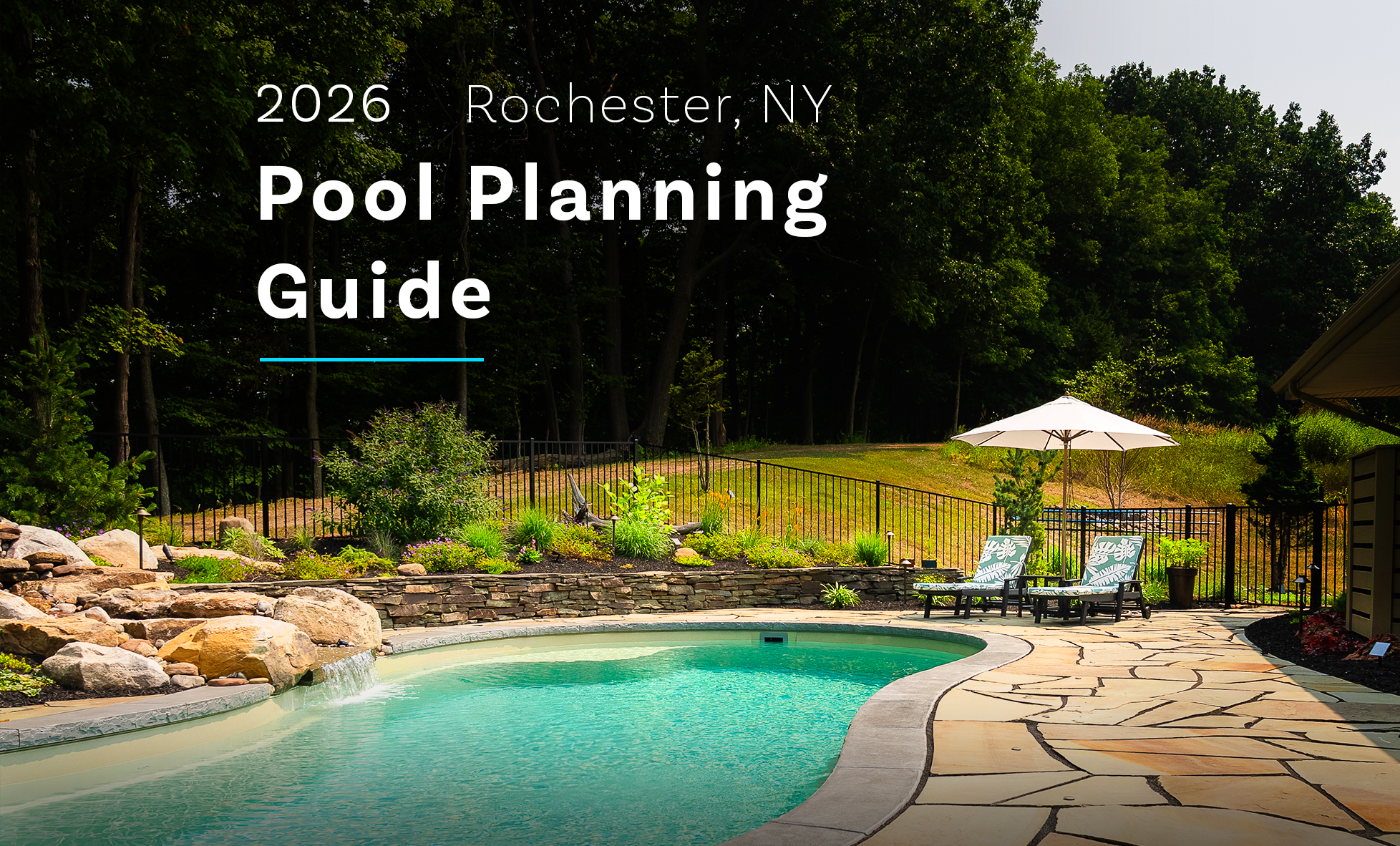
In this guide, we share everything worth knowing when planning a dream pool.
Thinking about installing an in-ground pool? Start by planning the entire backyard, not just the pool.
Why? When you plan the full project from the beginning, you make better decisions, avoid costly surprises, and end up with a backyard that feels intentional.
Start by planning your entire backyard, not just the pool. That is one of the smartest things a homeowner can do.
1. Why planning your pool early matters
A pool project involves much more than choosing a shape and breaking ground. Before construction begins, there are important decisions that affect the layout, budget, timeline, and finished look of the yard.
Planning early gives you more time to:
Define your goals
Compare pool types
Understand the true project cost
Think through the full backyard layout
Prepare for permits and local requirements
Make smart choices about features and finishes
For homeowners in Rochester and the Finger Lakes, planning in fall, winter, or early spring can also help position your project to be ready for the swimming season sooner.
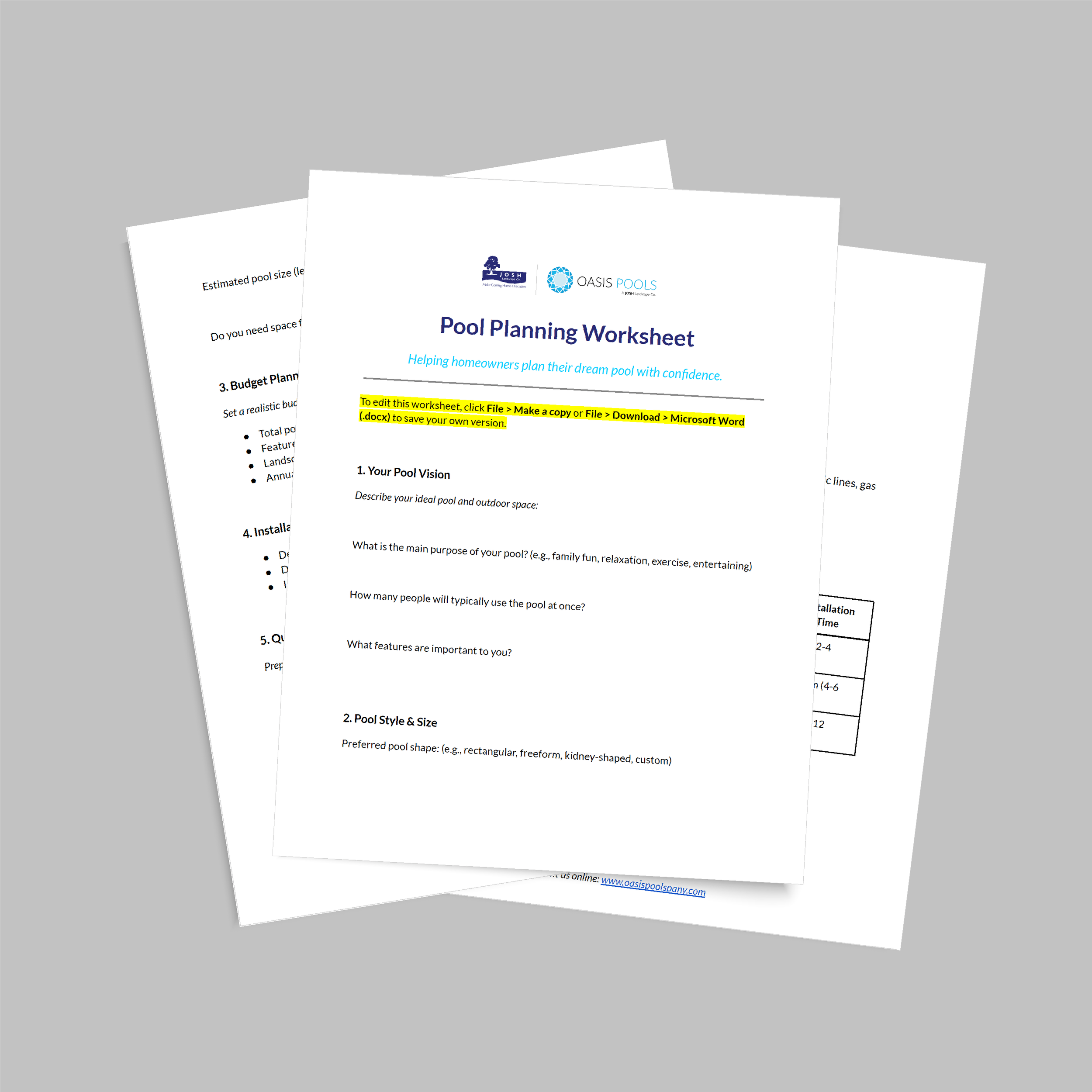
Download the Pool Planning Worksheet to start mapping your goals, backyard priorities, and budget.
Get organized and plan your dream pool. Click here to download and edit your own copy.
2. Start by defining your goals
Before you compare pool types or ask for pricing, get clear on why you want a pool in the first place.
Ask yourself:
How will we use the pool most often?
Is this mainly for relaxing, entertaining, exercise, kids, or family time?
Do we want a simple pool project or a full backyard renovation?
How important are low maintenance, quick installation, and long-term durability?
What do we want this space to feel like when it is done?
Your answers will help guide decisions about pool size, shape, depth, add-ons, surrounding patio space, and the overall design of the backyard.
A good pool project should match the way you live, not just the size of your yard.
3. What type of in-ground pool is right for you?
There are three main types of in-ground pools: fiberglass, vinyl liner, and gunite. Each has different strengths, costs, and maintenance needs. The right choice depends on your budget, goals, design preferences, and how much maintenance you want long-term.
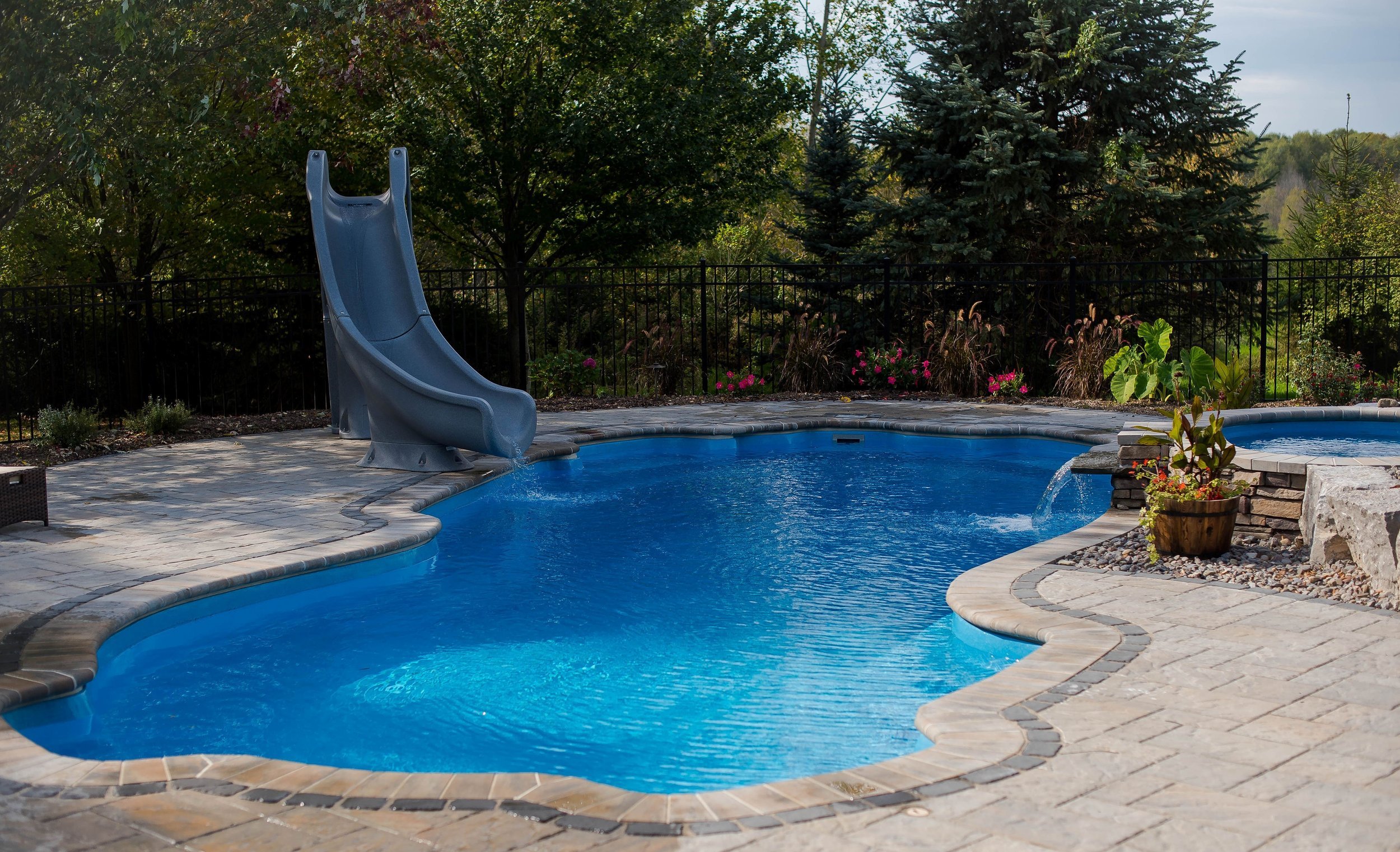
Fiberglass Pools
Price range: $45,000 to $100,000.
Fiberglass pools are one of the most popular options for homeowners who want a beautiful, durable, and low-maintenance pool.
Because the shell is pre-manufactured, installation is usually faster than with gunite. Fiberglass pools also have a smooth, non-porous surface, which helps reduce algae buildup and makes routine maintenance simpler. They work well with saltwater systems and come in a wide range of attractive shapes and finishes.
-
faster installation
simpler maintenance
a smooth, comfortable finish
salt system compatibility
a clean, polished look
a pool that works well as part of a larger backyard project
Fiberglass does have limits. Because the shells are manufactured in set shapes and sizes, there is less design flexibility than with gunite. But for many homeowners, the available options are more than enough.

Vinyl Liner Pools
Price range: $50,000 to $75,000.
Vinyl liner pools are often chosen by homeowners looking for a lower upfront cost and more flexibility in size and shape.
They can be a strong option for buyers who want to maximize pool size while keeping the initial investment lower. The surface is soft and smooth, and there is room for customization. Over time, though, the liner will need to be replaced (10-12 if well cared for). That long-term cost should be part of the planning process.
-
a lower initial price
more design flexibility than fiberglass
a larger pool for less upfront cost
-
Liners typically need replacement every 10 to 12 years
Punctures or tears can happen
Long-term ownership costs may be higher than expected

Gunite Pools
Price range: $100,000 to $150,000
Gunite pools offer the most customization of the three main pool types.
Because they are built on-site, they give homeowners more freedom with shape, depth, size, and custom design details. That makes them a strong fit for people who want a one-of-a-kind pool design. Gunite pools also typically involve a longer build time, more upkeep, and a higher total investment.
-
maximum customization
unique design features
a highly tailored pool layout
-
longer installation timeline
more maintenance
higher overall cost
Pool type summary:
Fiberglass is often best for homeowners who want lower maintenance, faster installation, and long-term durability.
Vinyl liner can make sense for homeowners who want a lower initial cost and more shape flexibility.
Gunite is usually best for homeowners who want the most customization and are comfortable with a longer timeline and more ongoing upkeep.
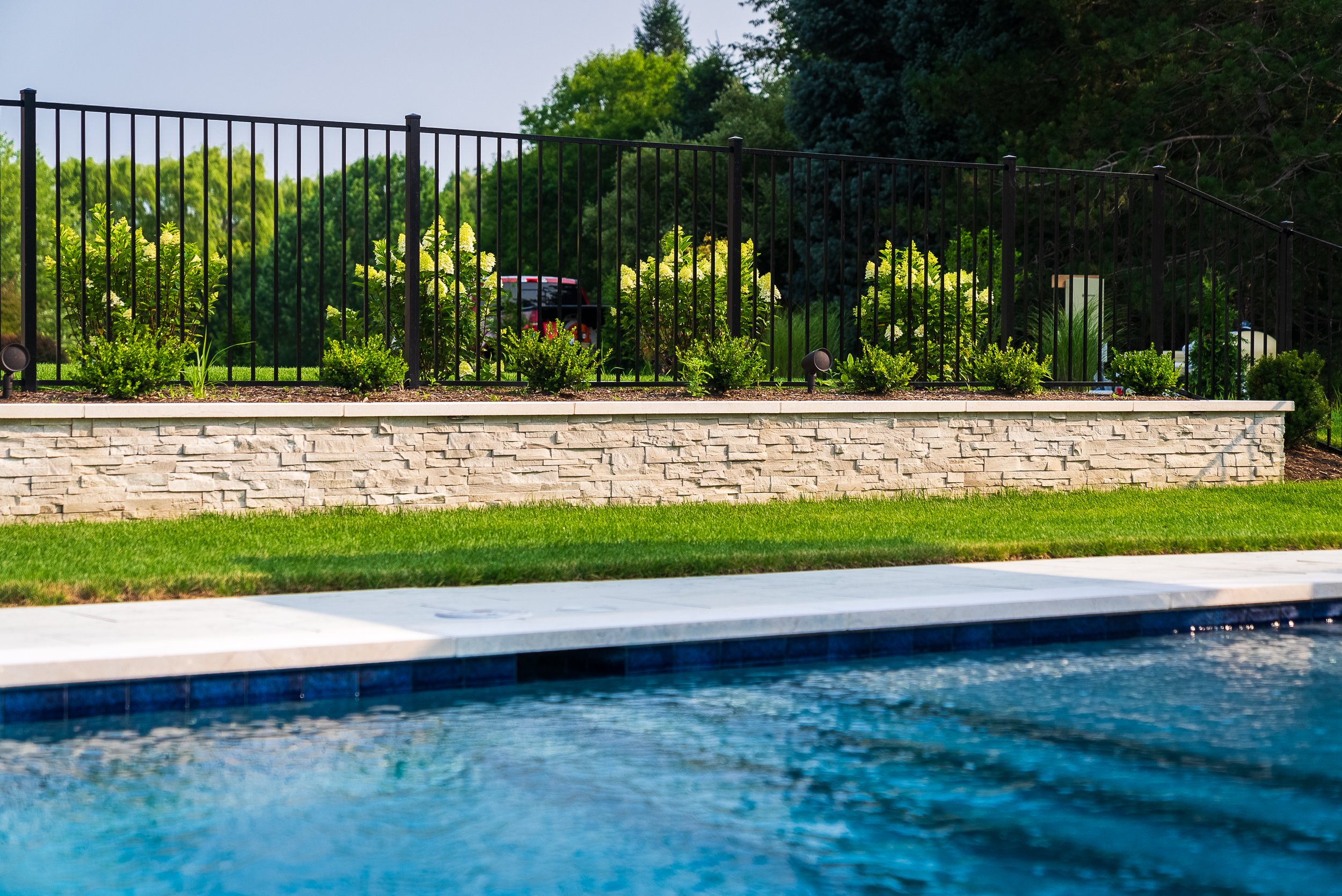
The choice comes down to your budget, maintenance preferences, and a design that best fits your backyard space.
4. How much does an in-ground pool cost?
In-ground pool pricing varies based on pool type, size, access to the yard, site conditions, features, economic factors, and how much of the surrounding backyard is included in the project.
For fiberglass pool installs, these are helpful starting points:
Smaller fiberglass pools: Average around $75,000
Medium fiberglass pools: Average around $110,000
Larger fiberglass pools: Average around $115,000
These ranges are useful for planning, but they only tell part of the story. Remember, the pool is the star of the show but not the full project. Homeowners should always plan for a patio, pool surround, landscaping, drainage, fencing, utilities, and final site restoration.
That is why it is so important to think about the entire backyard from the start!
Download Your Free Pool Planning Worksheet!
Get your budget and ideas organized! Click below to download and edit your own copy.
5. What should you budget for besides the pool?
This is where many homeowners get caught off guard. A new pool is a major investment, but the pool shell is only one part of the overall cost. To create a backyard that looks finished and functions well, you also need to budget for the space around it.
Additional project costs beyond the pool include:
-
Heavy equipment affects more than the pool footprint. Lawn restoration, planting, grading, and site cleanup are often part of the final phase of the project. Source pricing also notes that landscaping and lawn repair can range widely depending on complexity.
-
Fencing is often required for safety and code compliance. Some properties already have adequate perimeter fencing, while others need new fencing or modifications.
-
Pool equipment, lighting, automation, heaters, and electrical hookups all need to be planned and coordinated.
-
These details are easy to overlook, but they have a big impact on how the backyard performs after the project is done. Water needs a place to go, and the site needs to be shaped properly to protect the finished space.
-
Pool owners should also plan for maintenance, seasonal opening and closing, and long-term care. The source guide includes annual DIY maintenance, maintenance contracts, and yearly opening and closing as part of ownership costs.
A good rule of thumb is to think in three buckets:
the pool
the required site and code items
the finished backyard around the pool
That approach creates a more realistic plan from the beginning.
-
This includes decking, coping, walkways, lounging space, and hardscape around the pool.
A rough planning range:
simple pool surround: around $45,000 to $60,000
mid-level surround: around $80,000 to $120,000
high-end surround: around $125,000 to $300,000+
For pricing on additional outdoor features, please refer to our landscape pricing guide.

6. What shape, size, and depth should your pool be?
The right pool design depends on your goals, your yard, and how you plan to use the space.
A great pool design thoughtfully balances beauty, function, safety, and the bigger picture of the entire backyard.
-
Rectangular pools often feel clean, classic, and modern. Freeform pools feel softer and more natural. The right shape usually depends on your home style, patio design, and the mood you want for the backyard.
Click here to see Leisure Pools for the latest fiberglass pool shapes.
-
The best size is the one that fits your yard and still leaves space for the rest of the experience! Pool lengths range from 20’ to 40’.
-
Think about how your family will actually use the pool. Lounging, family recreation, games, diving, and lap swimming all call for different design choices.
Some pools have flat bottoms, and others are sloped for different depths.
-
Tanning ledges, built-in spas, beach entries, bubblers, water features, and upgraded finishes can add comfort and visual impact when they fit your lifestyle and budget.
-

7. What should homeowners know about permits and fencing?
Permits and safety requirements are a normal part of the pool planning process.
Most municipalities have specific codes for pool installation, and many require a property survey map during permitting. Timelines can vary by town, but permitting often takes a few weeks, depending on local requirements. Fencing is also commonly required for safety, although some homes already have fencing that meets code.
Let’s turn our focus to the behind-the-scenes details. Every locality has specific codes for pool installations. A property survey map is required for permitting, so be sure to find yours when the time comes! Typical permitting processes take 2-4 weeks, depending on your town’s requirements.
Oasis Pools handles the permitting for you, ensuring your project meets all safety and zoning requirements. This part of the project is one more reason why experience matters. Good planning helps prevent delays and last-minute changes. Not all companies do this, so be sure to ask!

Quick access to popular town codes in Rochester, NY:
Town of Pittsford, NY- https://ecode360.com/5126952
Town of Fairport, NY - https://ecode360.com/10645780
Village of Victor, NY - https://ecode360.com/9479630
Town of Mendon, NY - https://ecode360.com/29608756
Town of Webster, NY - https://www.villageofwebster.com/pools.html
Don’t see your town? Google search: “ecode360 + your town/zip code”
8. How long does an in-ground pool project take?
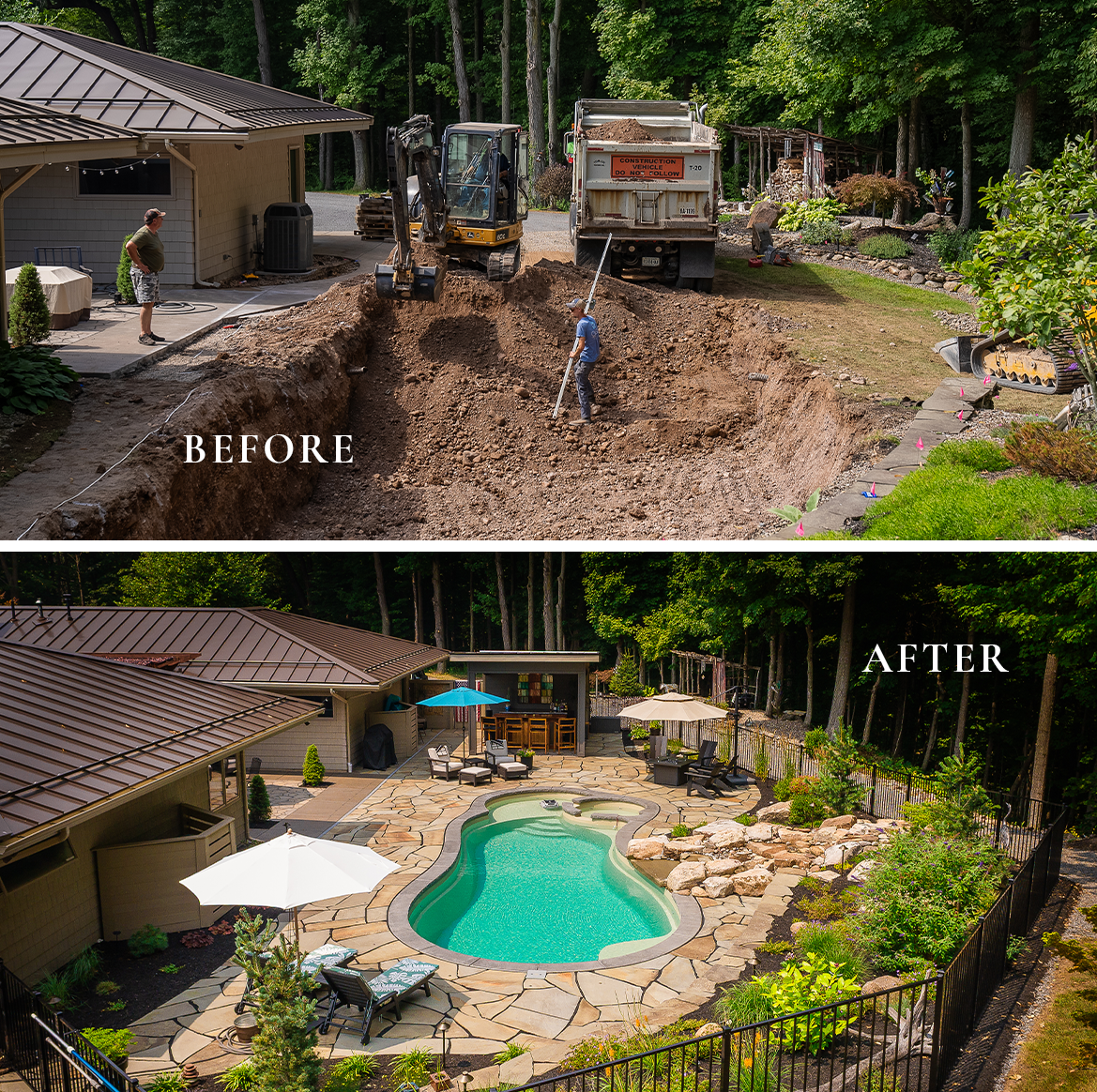
The honest answer is that the full process usually takes longer than people expect, especially when you include design, permitting, pool installation, patio work, landscaping, and final restoration.
Full backyard pool projects can take 6-9 months from initial design to completion and final touches. The pool shell may go in relatively quickly, especially with fiberglass.
Design and Planning: 3-6 weeks.
Permitting: 2-4 weeks
Pool Install: 30-60 days
Construction: 1-3 months.
Finishing Touches: 1-2 months for landscaping and custom hardscape features.
“For fiberglass pools, we strive for a dig-to-swim time of 30 days from commencement. ”
A Five Step Breakdown of a Pool Install:
-
Starting with the design and planning phase, you'll work closely with a designer to transform your vision into reality.
This crucial stage involves exploring different ideas and possibilities for your project, including the layout, pool shape, materials, colors, and aesthetic preferences.
It's important to consider the functionality, practicality, budget, space constraints, and local regulations, ensuring that the final result aligns perfectly with your vision through collaboration with the designer.
-
In the scheduling phase you'll work closely with your designer and project manager to set up a specific timeline for the installation process.
This stage involves coordinating with the pool installation team to determine a suitable date and time for the actual installation to take place. Additionally, you will focus on finalizing smaller details related to your pool surround, such as confirming the chosen materials, colors, and any additional features or amenities.
The scheduling phase ensures that all necessary preparations are made and that you are well-prepared for the upcoming installation of your pool surround.
-
During the excavation phase of an in-ground pool installation, the pool company begins the exciting process of breaking ground to create your new pool. This significant milestone marks the official start of construction. It's important to note that this phase can be a bit messy and noisy, as heavy machinery is used to excavate the area where the pool will be located. The specific details of the excavation phase can vary depending on the type of pool you choose, such as the shape, size, and depth.
Despite the temporary disruption, this phase represents the beginning of transforming your vision into a tangible reality!
-
During the installation phase, the unique characteristics of the pool type you selected come into play, resulting in varying processes and timelines.
For instance, if you opted for a gunite pool, the installation process is typically more involved and time-consuming. In this case, the construction crew would begin by laying a framework of rebar to provide structural reinforcement. Next, they would proceed to spray a mixture of concrete and sand, known as gunite, which is meticulously shaped and smoothed to form the pool shell. Other pool types may involve different steps, such as assembling pre-formed panels or installing a vinyl liner.
The installation phase showcases the specialized techniques and materials used to bring your chosen pool type to life, ensuring that every detail is carefully executed to create the ideal swimming environment.
-
The pool surround phase is where the pool portion of your project finally starts to come together, combining the natural beauty of landscaping with the practicality of hardscaping to create a complete and enjoyable outdoor oasis.
This phase can begin during the pool installation, especially if you’re incorporating additional features such as a patio, or outdoor structure, like a pool house or cabana.
Landscaping elements such as plants, trees, shrubs, and flowers are strategically placed to create a visually appealing and inviting atmosphere. Also, don’t forget about yard repair!
Hardscaping features like pathways, patio areas, seating, and decking are installed to provide functional spaces for relaxation, entertaining, and easy access to the pool.
Download the Pool Planning Worksheet to map your ideal project timing and key decisions before construction begins.
9. What pool add-ons are worth considering?
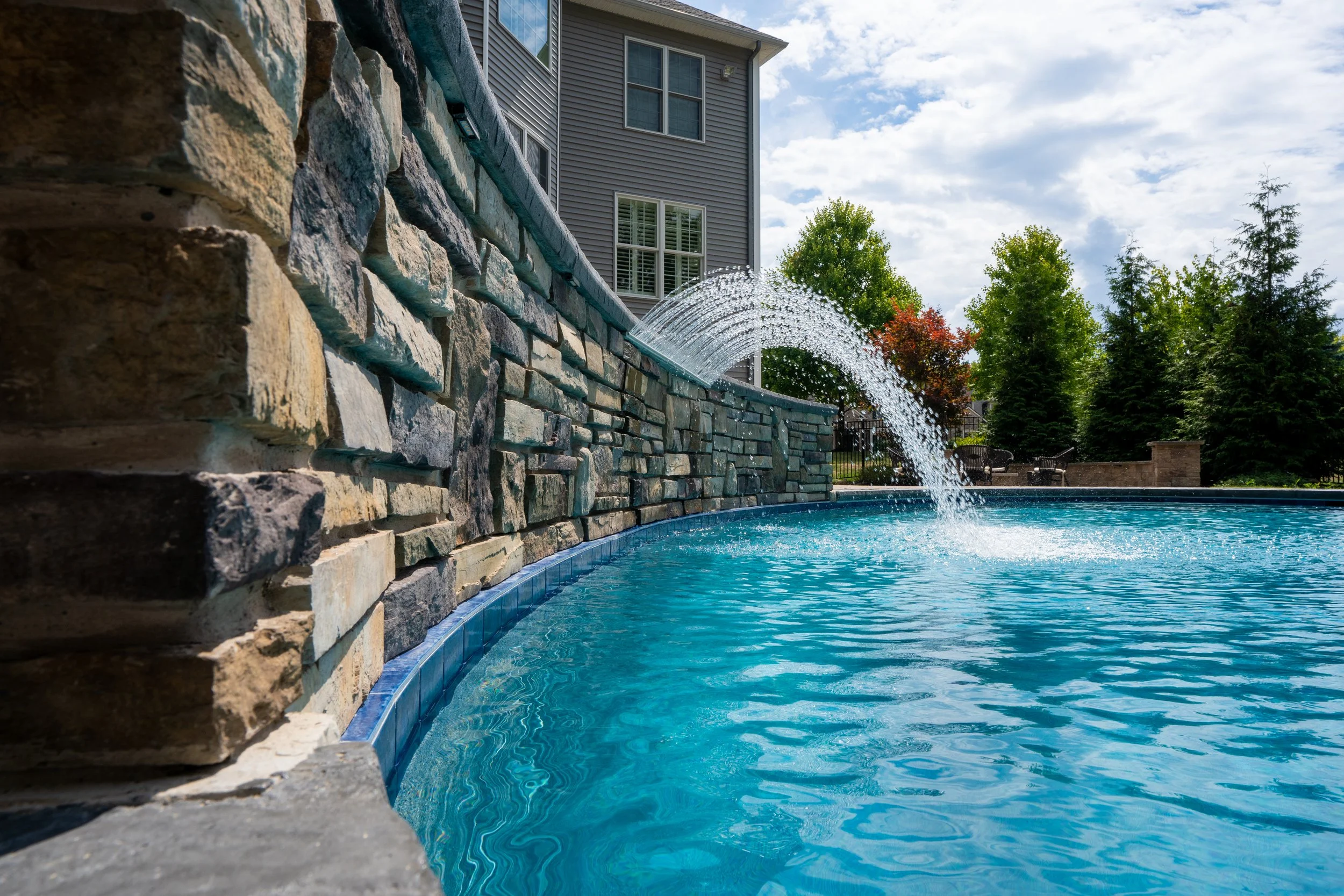
The best add-ons are the ones that improve the way you actually use the pool and the backyard.
Pool Lighting: LED lights not only provide illumination for safe night swimming, they also contribute to your overall backyard aesthetic.
Heating System: A pool heater is a must-have in Rochester for extending your swimming season!
Fiberglass Spa: Fiberglass spas are designed with open seating flexibility in mind.
Bubblers: Bubblers replicate the bubbly nature of hot springs, adding spa-like features to your tanning ledge.
UV Sanitizer
Auto Cover
Water Slide
Safety Cover
Cantilever Coping
Sound Systems
10. How do you choose the right pool company?
Did you know Oasis is the only pool company in Rochester that handles your entire pool project? From design to pool to patio, we manage it all.
Not all pool companies approach projects the same way.
Some focus mainly on the pool itself. Others help homeowners think through the full backyard experience, including the patio, landscaping, drainage, permits, fencing, and final restoration.
When comparing companies, ask:
Do they help plan the full backyard, not just the pool?
Who handles permits and code requirements?
Who coordinates fencing, utilities, and site details?Oasis Pools
Who handles patio work, planting, and lawn repair?
What is included in the proposal, and what is not?
How will communication work during the project?
Can they show examples of completed projects like mine?
A company that can guide both the pool and the space around it can create a much smoother experience for the homeowner.
For many families, that integrated approach is the difference between a pool project that feels pieced together and one that feels complete.
Oasis Pools, JOSH Landscape Co.’s pool division, is built around that full-project mindset. We install the pool and help plan the surrounding space so the entire backyard works together seamlessly.
Final Thoughts
A great pool project is about more than installing a place to swim.
It is about creating a backyard that fits your family, your property, and the way you want to live outdoors. When you plan the pool, patio, landscaping, fencing, drainage, utilities, privacy, and overall layout together, you make smarter decisions and usually end up with a better final result.
The earlier you start planning, the more confident and organized you can be.
Download our free Pool Planning Worksheet to get your ideas, priorities, and budget in order before you begin.
Frequently asked questions about planning an in-ground pool
-
Earlier is better. Many homeowners start in the fall, winter, or early spring so they have time for planning, permits, and scheduling.
-
The total cost depends on the pool type, size, site conditions, features, and how much of the surrounding backyard is included. For fiberglass pool installs, smaller pools average around $75,000, medium pools around $110,000, and larger pools around $115,000.
-
The best type depends on your priorities. Fiberglass is popular for lower maintenance and faster installation. Vinyl liner offers a lower upfront cost. Gunite offers the most customization.
-
You should also plan for the pool surround, patio, landscaping, fencing, drainage, grading, utilities, lawn repair, and ongoing maintenance.
-
Most projects take longer than homeowners expect because the full timeline includes design, permits, installation, and finishing work around the pool.
-
Yes. The best results usually come from planning the entire backyard together so the layout, budget, drainage, and final appearance all work as one complete design.
-
For many homeowners, yes. Fiberglass pools are popular because they are durable, lower maintenance, compatible with saltwater systems, and typically faster to install than gunite.
-
A finished pool project usually includes more than the pool itself. Patio space, landscaping, privacy, fencing, grading, and lawn restoration all help create a backyard that feels truly done.
Ready to Dive In?
Please fill out the form below to get in touch with our office.
Copyright 2025 www.joshlandscape.com